Skip to content
Introduction
The global demand for eco-friendly fuel alternatives has skyrocketed in recent years, and wood charcoal briquettes have emerged as a leading solution. Whether you are an entrepreneur looking to enter the renewable energy sector or an existing biomass processing business aiming to expand, understanding the wood charcoal briquette production line is essential. This comprehensive guide walks you through every stage—from raw material preparation to final packaging—while highlighting key equipment, cost considerations, and expert recommendations. By the end, you will have a clear roadmap to set up your own profitable briquette manufacturing operation.
What Is a Wood Charcoal Briquette Production Line?
A wood charcoal briquette production line is an integrated system of machines that convert biomass waste (such as sawdust, wood chips, rice husks, and coconut shells) into dense, uniform charcoal briquettes. Unlike traditional charcoal made from felled trees, briquettes are sustainable, burn longer, and produce less smoke. The production line typically includes crushing, drying, briquetting, carbonization, and packaging equipment. Automating these processes ensures consistent quality, high output, and lower labor costs.
Why Invest in a Wood Charcoal Briquette Production Line?
-
Environmental benefits: Utilizes agricultural and forestry waste, reducing deforestation.
-
High market demand: Briquettes are used for cooking, heating, industrial boilers, and even hookah charcoal.
-
Profit margins: With low-cost raw materials and simple processing, returns on investment can be achieved within 6–12 months.
-
Government incentives: Many countries offer subsidies for biomass energy projects.
Key Raw Materials for Charcoal Briquette Production
The success of your wood charcoal briquette production line largely depends on the quality and consistency of raw materials. Common feedstocks include:
-
Sawdust (most popular)
-
Wood chips and shavings
-
Rice husks
-
Coconut shells
-
Bamboo residues
-
Coffee husks
-
Peanut shells
The material should have a moisture content below 15% and a particle size no larger than 5 mm for optimal briquetting.
Core Components of a Complete Charcoal Briquette Production Line
A fully equipped wood charcoal briquette production line consists of the following machines:
1. Crusher/Hammer Mill
Reduces large wood chunks or biomass into fine powder (3–5 mm particle size). A crusher ensures uniform material feeding into the next stage.
2. Dryer (Rotary or Flash Dryer)
Lowers moisture content to 8–12%, which is critical for binding during briquetting. Overly wet material will produce weak, smoky briquettes.
3. Briquette Machine (Screw Press or Hydraulic)
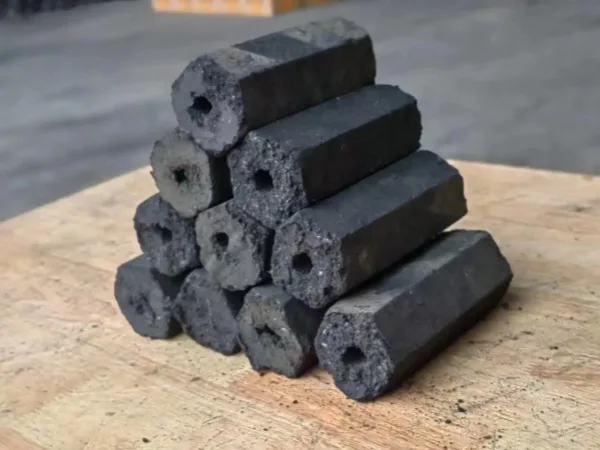
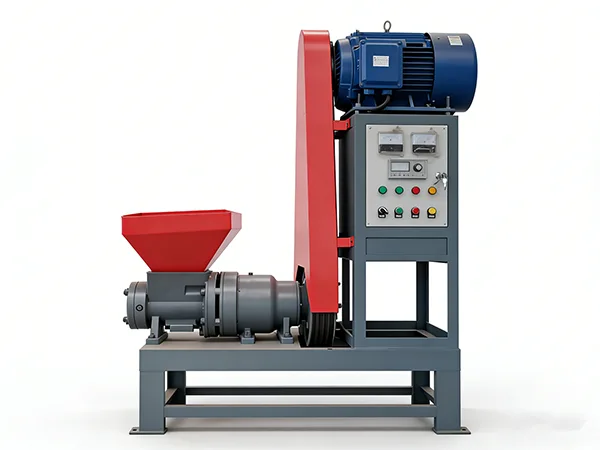
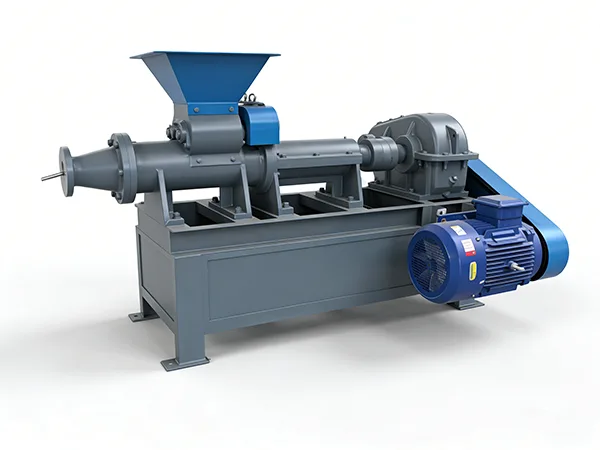
The heart of the production line. A screw-type briquette extruder compresses the biomass under high pressure and temperature, forming hexagonal, square, or cylindrical briquettes with a central hole for better airflow. Hydraulic presses are used for larger, solid briquettes. You can explore various charcoal briquette making machines on the Manto product page.
4. Carbonization Furnace (Kiln)
Converts raw briquettes into charcoal through pyrolysis. Modern continuous carbonization furnaces recover combustible gases for re-use, saving energy and reducing emissions.
5. Cooling and Packaging System
After carbonization, briquettes must be cooled before packaging. An automatic packaging machine weighs and seals the final product into bags of 2 kg, 10 kg, or bulk.
6. Conveyors and Auxiliary Equipment
Belt conveyors, screw feeders, and control panels tie the line together for seamless operation.
Step-by-Step Wood Charcoal Briquette Manufacturing Process
Let us break down the actual workflow of a wood charcoal briquette production line to help you understand what happens at each stage.
Step 1: Raw Material Preparation
Collect and sort biomass waste. Remove stones, metal, or other contaminants that could damage equipment.
Step 2: Crushing
Feed the material into a hammer mill. Output size should be ≤5 mm. For sawdust, this step may be skipped if the particle size is already fine.
Step 3: Drying
Pass the crushed material through a rotary dryer. Ideal moisture content: 8–12%. Use a moisture meter to verify.
Step 4: Briquetting
Transfer dried powder to the briquette machine. The screw extruder heats and presses the lignin (natural binder) in the biomass, forming solid briquettes without any chemical additives. Temperature typically ranges from 200–300°C.
Step 5: Carbonization (Optional but Recommended)
Place raw briquettes into the carbonization furnace. The process takes 6–12 hours depending on furnace size and material. During carbonization, volatile matter is driven off, leaving behind high-carbon charcoal briquettes with a calorific value of 6,000–7,500 kcal/kg.
Step 6: Cooling and Packaging
Cool the charcoal briquettes in open air or on a cooling conveyor until they reach room temperature. Then pack them using a manual or automatic bagging machine.
Choosing the Right Equipment: Factors to Consider
When evaluating wood charcoal briquette production line options, keep the following in mind:
-
Production capacity: From 200 kg/h to 3 tons/h. Choose based on your budget and market size.
-
Automation level: Semi-automatic lines are cheaper but require more labor; fully automatic solutions offer higher efficiency and lower long-term labor costs.
-
Energy efficiency: Look for lines with waste heat recovery (e.g., using carbonization off-gas to preheat the dryer).
-
After-sales support: A reliable manufacturer provides installation, training, and spare parts.
This is where Henan Manto Machinery Equipment Co., Ltd. stands out. With over a decade of experience in biomass equipment manufacturing, Henan Manto Machinery offers customized wood charcoal briquette production line solutions tailored to your raw material and output requirements. Their machines are known for durability, energy efficiency, and competitive pricing.
Cost Analysis and ROI of a Wood Charcoal Briquette Production Line
Investment costs vary widely based on capacity and automation. A small-scale line (200–300 kg/h) may cost between 15,000and30,000. A medium-capacity line (1–2 tons/h) ranges from 50,000to120,000, while large industrial lines exceed $200,000.
Potential revenue:
-
One ton of wood charcoal briquettes sells for 300–600 depending on region and quality.
-
Raw biomass cost: approx. 20–50 per ton.
-
Electricity and labor: 30–80 per ton.
Example ROI calculation:
A line producing 1 ton per hour, operating 8 hours daily for 25 days = 200 tons/month. Assuming a selling price of 400/tonandproductioncostof150/ton, gross profit = 250/ton×200=50,000/month. After deducting depreciation, transportation, and overhead, payback period can be as short as 3–6 months. For a real-world production case, check out this step-by-step guide to making charcoal briquettes from sawdust.
Common Mistakes to Avoid When Setting Up Your Production Line
-
Skipping drying: High moisture leads to cracked, weak briquettes.
-
Using oversized raw material: Clogs the briquette die and reduces throughput.
-
Ignoring binder requirements: Some materials (e.g., rice husks) need a small amount of starch or clay as binder.
-
Poor carbonization control: Over-cooking reduces yield; under-cooking results in high smoke.
-
Buying cheap, unbranded machines: Leads to frequent breakdowns and no spare parts. Always purchase from established manufacturers like Henan Manto Machinery Equipment Co., Ltd. , which provides full technical support and warranty.
Maintenance Tips for Long-Lasting Performance
To keep your wood charcoal briquette production line running smoothly:
-
Clean the briquette screw and die every 40–50 hours to prevent carbon buildup.
-
Lubricate bearings and gears weekly.
-
Check dryer seals to avoid heat loss.
-
Calibrate moisture sensors monthly.
-
Keep a stock of wear parts (screw tips, dies, belts, thermocouples).
Future Trends in Charcoal Briquette Production
The industry is moving towards zero-waste, closed-loop systems. Advanced wood charcoal briquette production line now integrate:
-
Gasification reactors that convert off-gas into electricity.
-
IoT sensors for real-time monitoring of temperature, moisture, and throughput.
-
Mobile briquetting units for on-farm processing.
As biomass energy gains policy support worldwide, early adopters of efficient production lines will capture significant market share. Stay updated with the latest industry developments on the Manto news page.
Why Partner with Henan Manto Machinery?
When you choose Henan Manto Machinery Equipment Co., Ltd. as your supplier, you are not just buying machines—you are investing in a partnership. Their team assists with:
-
Plant layout design
-
Raw material testing (they run your biomass through their demo line)
-
Operator training and on-site installation
-
Continuous technical support via WhatsApp, Skype, or email
Moreover, Henan Manto Machinery offers modular lines that can be expanded later, so you start small and grow without replacing entire equipment.
Conclusion
Setting up a wood charcoal briquette production line is a smart business move in today’s green economy. From reducing environmental waste to generating steady cash flow, the benefits are tangible. By understanding the process—crushing, drying, briquetting, carbonization, and packaging—and choosing reliable equipment from a trusted manufacturer like Henan Manto Machinery Equipment Co., Ltd., you can avoid common pitfalls and achieve rapid ROI.
Whether you need a small starter line or a high-capacity industrial system, start by defining your budget, raw material availability, and target market. Then, reach out to experienced suppliers for a customized proposal. With the right wood charcoal briquette production line, you will turn low-value biomass into high-demand fuel and build a sustainable business for years to come.
Ready to start your production line? Contact Henan Manto Machinery Equipment Co., Ltd. today for a free consultation, detailed quotation, and sample testing. Don’t wait—the market for clean charcoal briquettes is growing every day.