Skip to content
Charcoal production has been practiced for centuries, yet many operators still rely on inefficient traditional kilns that waste heat, produce inconsistent quality, and deliver low yields. If you are searching for how to improve charcoal production efficiency, you are not alone. Thousands of biomass entrepreneurs, recycling center owners, and agricultural processors look for better methods every day.
The search habits around this topic typically fall into four categories: (1) “How can I get more charcoal from the same amount of wood?” (2) “What equipment upgrades reduce fuel costs?” (3) “How do I achieve faster carbonization without sacrificing quality?” (4) “What is the ROI of modernizing my charcoal plant?” This comprehensive guide answers all these questions with data-driven strategies and real-world insights.
By implementing the seven strategies below—covering everything from raw material preparation to syngas recycling—you can significantly boost your output, lower operating expenses, and produce higher-quality charcoal. And with the support of a global equipment manufacturer like Henan Manto Machinery Equipment Co., Ltd. , these upgrades become practical and profitable for operations of any scale.
Why Charcoal Production Efficiency Matters in 2026
The global charcoal market is projected to reach $4.5 billion by 2030, driven by growing demand for barbecue fuel, activated carbon, metallurgical reductants, and biochar for carbon credits. Yet traditional earth-mound kilns achieve only 10–20% conversion efficiency, wasting over 80% of the biomass energy as smoke and heat.
Modernizing your production method—whether through continuous carbonization, waste heat recovery, or feedstock optimization—can double your yield while reducing emissions. For a 2-ton-per-day operation, improving efficiency from 25% to 40% yield adds approximately $100,000 in annual gross profit. The question how to improve charcoal production efficiency is not just technical; it is a business imperative.
Strategy 1: Upgrade from Batch Kilns to Continuous Carbonization Furnaces
The single most impactful change you can make is shifting from traditional batch kilns to a continuous carbonization furnace . Batch systems require manual loading, cooling, and unloading, with extended carbonization cycles of 4–5 days. Continuous furnaces operate 24/7, with material moving through the carbonization chamber via screw or conveyor systems.
Continuous systems deliver superior energy efficiency by recapturing and reusing the syngas released during carbonization. Smaller batch furnaces may consume 5–10 kWh per ton of charcoal, while larger continuous systems with heat recovery mechanisms can reduce energy use by up to 30%. Precision temperature control between 450°C and 550°C ensures consistent product quality and maximum yield.
Most importantly, continuous carbonization reduces labor requirements dramatically. One operator can oversee a fully automated system that previously required a team of five. When researching how to improve charcoal production efficiency, continuous carbonization should be your first upgrade.
Strategy 2: Pre-Dry Your Raw Material Before Carbonization
High moisture content is the silent killer of charcoal yield and efficiency. Wet biomass requires excessive energy to evaporate water before carbonization can begin. For every 10% moisture reduction, you typically gain 5–8% in charcoal yield.
Studies confirm that drying wood waste before carbonization improves thermal efficiency and increases biochar yield by reducing moisture-related energy loss. The ideal moisture content for carbonization is below 15%. Freshly harvested wood often exceeds 50%.
Use a rotary dryer or flash dryer to remove moisture efficiently. Heat can be supplied by a biomass burner or by recycling hot exhaust from your carbonization furnace. This approach—drying with waste heat—is a textbook example of how to improve charcoal production efficiency through integrated system design. Many customers of Henan Manto Machinery Equipment Co., Ltd. achieve payback on their dryer investment in under six months simply through reduced fuel consumption and higher yield.
Strategy 3: Optimize Carbonization Temperature and Heating Rate
Temperature control is the most critical variable affecting both yield and quality. Research shows that carbonization temperatures between 450°C and 500°C, sustained for optimal duration, produce charcoal with low moisture content and well-developed porous microstructure. Lower temperatures under-carbonize, leaving excessive volatiles. Higher temperatures over-burn the char, reducing yield.
For maximizing charcoal yield while maintaining quality, studies indicate that yields of 41.15% can be achieved from Casuarina wood at 400°C, with fixed carbon content reaching 87.78% at 700°C. The optimal balance depends on your target market: barbecue charcoal requires higher fixed carbon (75–85%), while industrial fuel allows more flexibility.
Slow heating rates (1–30°C per minute) produce higher char yields, while faster rates shorten cycle time but may reduce yield by 10–20%. The best how to improve charcoal production efficiency approach often involves a two‑stage heating profile: low temperature pyrolysis followed by a temperature rise to increase fixed carbon without excessive yield loss.
Modern carbonization furnaces equipped with programmable logic controllers (PLCs) allow exact control over temperature ramping and hold times. Never rely on visual inspection alone—install thermocouples at multiple points within the furnace.
Strategy 4: Install Syngas Recirculation and Recovery Systems
The volatile gases released during carbonization—including carbon monoxide, methane, and hydrogen—contain up to 70% of the original biomass energy. In traditional kilns, this syngas escapes as smoke. In efficient systems, it is captured and burned to provide heat for the carbonization process or for pre‑drying raw material.
Syngas recirculation reduces external fuel consumption by 30–60% and virtually eliminates visible smoke, simplifying environmental compliance. A properly designed gas recovery circuit is fairly simple and energy‑efficient, with patents demonstrating this approach is well established in the industry.
When considering how to improve charcoal production efficiency for environmental as well as economic reasons, syngas recovery is non‑negotiable. Many regions now require emission controls, and a recirculation system pays for itself within 12–24 months through fuel savings alone.
Strategy 5: Select High-Yield Feedstock and Prepare Properly
Not all biomass is equal for charcoal production. Wood with higher lignin content generally yields more charcoal. Prosopis juliflora, containing approximately 25% lignin, is recognized as a suitable raw material for efficient carbonization. Other excellent choices include acacia (achieving yields up to 39.46%), casuarina, and hardwoods like oak and hickory.
Coconut shells and macadamia nutshells are exceptional feedstocks, with fixed carbon contents reaching 97% under optimized conditions. Nut shells produce dense, high‑value charcoal ideal for hookah and premium barbecue markets.
To achieve maximum efficiency, material preparation matters as much as selection. Use a hammer mill or crusher to reduce large pieces to uniform size (10–50 mm). Uniform particle size ensures even heating throughout the carbonization chamber, preventing under‑carbonized cores or over‑carbonized surfaces.
Strategy 6: Implement Waste Heat Recovery and System Integration
Standalone equipment operates at lower total efficiency than integrated systems. The most advanced answer to how to improve charcoal production efficiency involves linking your dryer, carbonization furnace, and any briquetting equipment into a single thermal loop.
For example:
-
Hot exhaust (400–600°C) from the carbonization furnace passes through a heat exchanger to pre‑dry incoming biomass.
-
The same exhaust may also pre‑heat combustion air for the furnace burner.
-
Cooling water from the charcoal discharge can be circulated to pre‑heat boiler feed water or building heating.
Each integration step reduces external energy purchases. A fully integrated charcoal production line can achieve overall thermal efficiency exceeding 70%, compared to 20–25% for traditional kilns.
When sourcing equipment, look for suppliers who offer complete lines rather than isolated machines. Henan Manto Machinery Equipment Co., Ltd. designs integrated systems where dryers, crushers, carbonization furnaces, and briquetting presses share common controls and heat recovery infrastructure, eliminating the compatibility headaches of mixing brands.
Strategy 7: Monitor, Measure, and Continuously Optimize
You cannot improve what you do not measure. Implement a data logging system to track:
-
Moisture content of incoming feedstock (daily spot checks)
-
Carbonization temperature profile (continuous monitoring)
-
Cycle time per batch or throughput per hour
-
Charcoal yield percentage (output weight ÷ dry input weight)
-
Fixed carbon content and volatile matter (weekly lab tests)
-
Fuel consumption (biomass or external energy)
Use this data to fine‑tune your process. For example, if yield drops suddenly, check moisture content—wet wood is the most common culprit. If fixed carbon is too low, extend residence time or increase final temperature by 25–50°C.
Statistical optimization studies have demonstrated that carbonization temperature and time are the independent process variables most affecting both yield and fixed carbon content. By systematically varying these parameters and measuring results, you can identify the optimal settings for your specific feedstock and furnace type.
Common Mistakes That Kill Charcoal Production Efficiency
Avoid these pitfalls frequently cited by operators searching for how to improve charcoal production efficiency:
| Mistake | Consequence | Solution |
|---|---|---|
| Carbonizing wet wood | Up to 50% energy wasted evaporating water, yield drops 15–25% | Always measure moisture; use rotary dryer for wet feedstock |
| Overloading the furnace | Uneven carbonization, partial combustion, increased fines | Maintain consistent feed rate; size furnace to your maximum throughput |
| Ignoring syngas recovery | 30–60% higher fuel bills; smoke violations | Install gas recirculation piping and burner |
| Using mixed, contaminated feedstock | Increased ash content; potential emissions | Sort raw material; consider briquetting to separate clean and waste streams |
| No temperature monitoring | Inconsistent quality from batch to batch | Install thermocouples and a digital controller |
| Neglecting maintenance | Wear parts fail, causing unplanned downtime | Follow daily, weekly, and monthly maintenance schedules |
Equipment Layout for an Efficient Charcoal Production Line (1–3 tons/day)
A modern line answering how to improve charcoal production efficiency typically includes:
-
Conveyor belt or screw feeder – transports raw wood waste into the primary crusher.
-
Hammer mill or wood chipper – reduces material to uniform size (10–50 mm).
-
Rotary dryer – lowers moisture from 40–50% to below 15%, heated by a biomass burner or syngas.
-
Cyclone and dust collector – captures dry material, cleans exhaust air for environmental compliance.
-
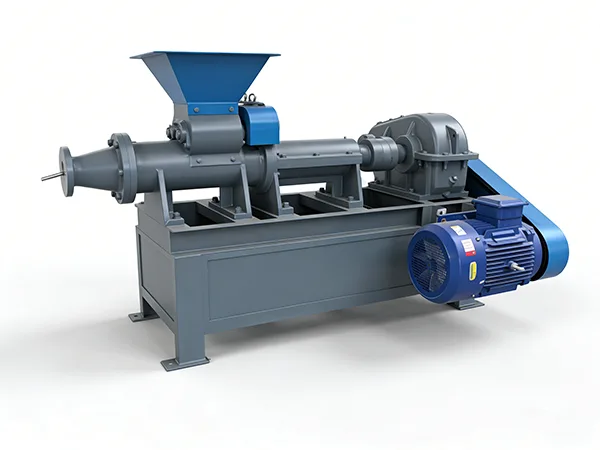
Continuous carbonization furnace – the heart of the line; processes dry, uniform biomass with syngas recirculation.
-
Gas burner and recirculation system – burns recovered syngas to pre‑heat the furnace and dryer.
-
Charcoal cooling screw – reduces temperature before packaging or further processing.
-
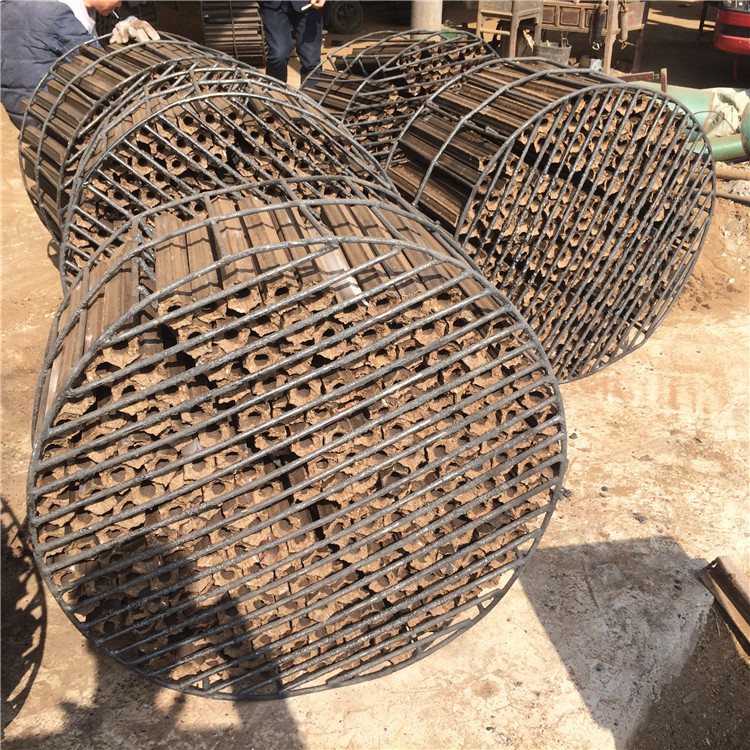
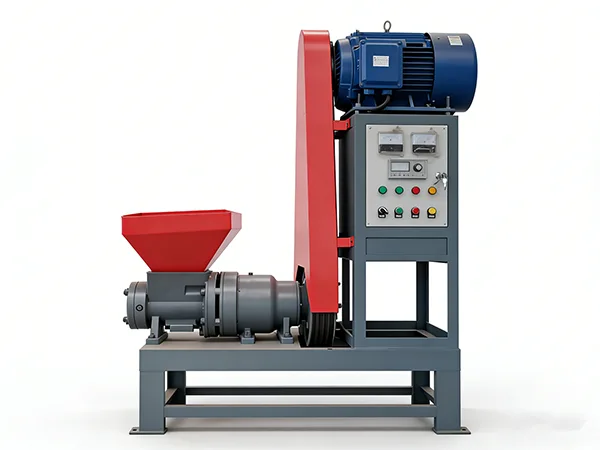
Briquetting press (optional) – converts charcoal fines into solid briquettes for sale at lower cost.
Total investment for this capacity ranges from $50,000 to $200,000, depending on automation level and brand. Payback period typically falls between 6 and 18 months.
Case Study: A Coconut Shell Charcoal Producer Doubles Yield
To illustrate how to improve charcoal production efficiency in practice, consider a medium‑scale coconut shell processor in Southeast Asia. Using traditional brick kilns, they achieved 22% charcoal yield and faced constant complaints about smoke from neighboring communities.
After installing a continuous carbonization furnace with syngas recirculation and a pre‑dryer, their results improved dramatically:
-
Yield increased from 22% to 38% of dry input weight
-
Carbonization cycle reduced from 5 days to 6 hours
-
Energy costs dropped 55% due to syngas recovery
-
Smoke eliminated, satisfying environmental regulators
-
Monthly production increased from 30 tons to 90 tons with the same labor force
The equipment paid for itself in seven months. Today, they export premium coconut shell charcoal to European barbecue markets at three times the local price.
Profitability: The Business Case for Efficiency
Beyond operational metrics, the ultimate measure of how to improve charcoal production efficiency is financial return. Industry data shows that raw material costs for finished charcoal are approximately $100–150 per ton, with market prices around $200–300 per ton for standard grades. A daily output of 2–3 tons yields monthly profits of $3,000–6,000, with payback typically achieved within 6–12 months.
For premium products like hookah charcoal, the profit margins are substantially higher: selling prices of approximately $900 per ton yield gross profits of roughly $500 per ton. With production capacity of 1 ton per day, monthly profits can reach $12,000–15,000, with payback periods of only 2–4 months.
Every efficiency gain directly increases these margins. A 5% improvement in yield adds approximately $15–25 per ton to gross profit. For a 500‑ton‑per‑year operation, that equals $7,500–12,500 of additional annual profit from efficiency improvements alone, before counting energy savings or labor reductions.
Conclusion: From Waste Wood to Profitable Charcoal
Mastering how to improve charcoal production efficiency transforms what might be an underperforming sideline into a highly profitable core business. The seven strategies outlined—continuous carbonization, pre‑drying, temperature optimization, syngas recovery, feedstock selection, system integration, and continuous monitoring—are proven and accessible.
The key is to invest in equipment from a manufacturer with global experience and comprehensive after‑sales support. Henan Manto Machinery Equipment Co., Ltd. supplies complete charcoal production lines to over 40 countries, with each system engineered to maximize yield while minimizing energy consumption and emissions. Their team offers free material testing and customized layouts to ensure every component—from the dryer to the carbonization furnace to the briquetting press—works together for optimal efficiency.
Ready to stop wasting wood and start producing more charcoal with less fuel? Begin by testing your current feedstock moisture, tracking your current yield, and contacting a specialist equipment provider. With the right upgrades, your charcoal operation can achieve higher output, lower costs, and faster returns than you ever thought possible.