Skip to content
The global demand for charcoal continues to grow steadily, driven by industrial applications, barbecue fuel markets, and the increasing use of biochar for soil remediation and carbon sequestration. However, many producers struggle with low yields, inconsistent quality, and high operational costs. If you are asking yourself “how to improve charcoal production efficiency” without sacrificing quality, you have come to the right place.
This comprehensive guide walks you through actionable strategies to optimize every stage of the charcoal production process. Whether you operate a small-scale facility or a large industrial plant, these techniques will help you achieve higher yields, shorter production cycles, and lower energy consumption.
Investing in a high-performance continuous carbonization furnace is one of the most effective ways to transform traditional batch processing into streamlined 24/7 operation—a key factor in charcoal production efficiency that separates market leaders from the rest.
1. Start with Raw Material Optimization (The Most Overlooked Factor)
Before any carbonization takes place, your raw material must be properly prepared. Studies have shown that raw material moisture control for charcoal is arguably the most critical factor affecting both yield and quality.
Moisture Content Targets
-
Ideal range for carbonization: 8%–15%
-
What happens when moisture is too high: Consumes enormous energy for evaporation (more than 30% extra heat energy can be wasted), reduces pyrolysis efficiency, and causes incomplete carbonization
Particle Size Consistency
Raw materials with inconsistent particle sizes lead to irregular heat transfer, asynchronous devolatilization, and localized thermal gradients. A proper charcoal crusher should reduce feedstock to less than 30mm for uniform processing.
Practical Steps for Raw Material Optimization:
-
Install a drying system to bring moisture down to the optimal range.
-
Use waste heat from your carbonization process to power the dryer (circular economy approach).
-
Utilize high-efficiency drying systems to achieve ideal moisture levels before the material ever enters the furnace.
Henan Manto Machinery Equipment Co., Ltd. integrates high-efficiency drying systems with its carbonization lines, allowing producers to achieve ideal moisture levels before the material ever enters the furnace.
2. Select the Right Carbonization Technology
The carbonization stage is where your yield is determined. Traditional methods like earth mound kilns are notoriously inefficient, with conversion rates as low as 8% and heavy smoke generation that harms the environment and your workers’ health.
Intermittent (Batch) vs. Continuous Carbonization
| Feature | Intermittent Kilns | Continuous Carbonization Machines |
|---|---|---|
| Operation | Batch cycles, reheating each time | 24/7 steady-state operation |
| Temperature control | Fluctuates between batches | Stable multi-zone control |
| Energy efficiency | Lower, due to reheating cycles | Higher, with waste heat recovery |
| Labor | Manual intervention required | Fully automated (PLC controlled) |
| Output consistency | Variable | Highly consistent |
While intermittent carbonization furnaces offer simplicity for niche applications, continuous carbonization furnaces excel in energy efficiency, automation, and large-scale consistency. A high-quality continuous carbonization furnace equipped with an automated conveying system can reduce non-operation time by 15%–20% and maximize the advantage of 24-hour continuous carbonization.
Pyrolysis Reactor Advantages
Modern biomass carbonization technology revolves around slow pyrolysis reactors. Carbonization furnaces that operate under sealed, oxygen-deprived conditions ensure stable carbonization and recycle combustible gases to achieve energy self-sufficiency. Compared to traditional earth kilns, well-designed slow pyrolysis reactors have demonstrated:
-
Higher conversion efficiency
-
Faster production time per batch
-
Higher calorific value
-
Lower CO and PM emissions
Henan Manto Machinery Equipment Co., Ltd. offers both batch and continuous carbonization solutions, allowing producers to choose a configuration that matches their production scale and budget while maintaining the highest efficiency standards.
3. Optimize Equipment Configuration for Maximum Efficiency
Efficiency does not come from one machine alone—it requires a well-coordinated production line. Implementing the “zero waiting” connection mechanism is crucial.
Essential Equipment for an Efficient Charcoal Production Line:
-
Crusher/Hammermill: Reduces raw material to uniform particle size
-
Rotary Dryer: Brings moisture content down to optimal range
-
Carbonization Furnace/Reactor: The core technology—choose continuous over batch whenever possible
-
Cooling System: Essential for safe handling and preventing re-ignition
-
Gas Recycling System: Captures combustible gases to fuel the drying and carbonization stages
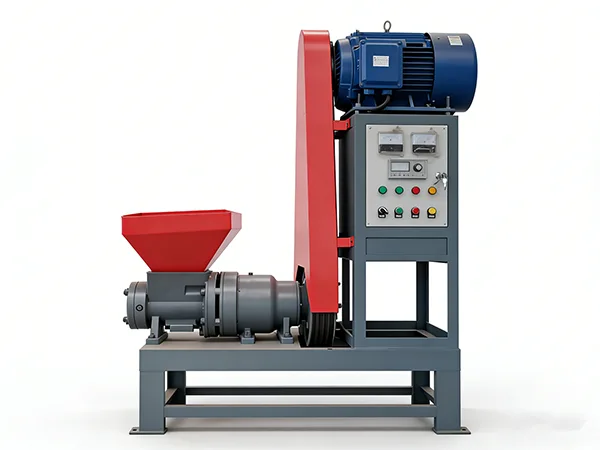
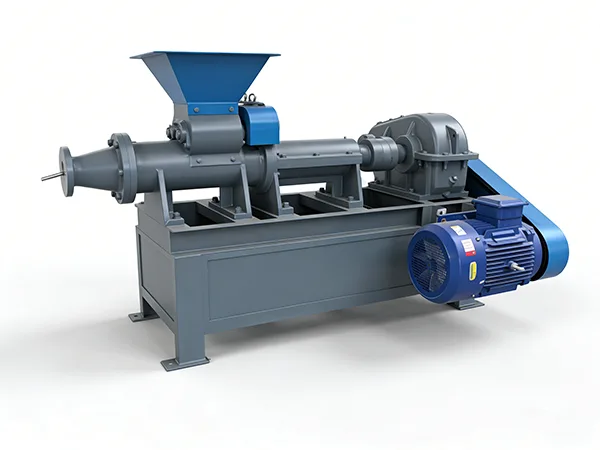
The charcoal briquette machine serves as the core forming equipment in wood chip charcoal production lines. Its primary function is to process loose wood chip particles under high-temperature, high-pressure physical conditions through powerful compression, ultimately extruding high-density biomass fuel briquettes (semi-finished product) for carbonization. When these components are integrated into a complete production line with automated controls, producers can significantly reduce labor requirements while achieving higher daily throughput.
4. Fine-Tune Production Parameters for Higher Yield
Even with the best equipment, improper parameter settings will lower your output. Scientific studies have identified three primary controllable variables: temperature, holding time, and heating rate.
Temperature Management
Slow pyrolysis is traditionally used for making charcoal. For maximizing how to increase charcoal yield:
-
Processing wood at around 500°C yields about 80%–85% carbon content
-
The highest biochar yield was obtained at 300°C with appropriate holding time
-
Carbonization at 505°C produced high-quality charcoal with good yield
Mechanical Pressure During Carbonization
A lesser-known but highly effective technique for carbonization process optimization is applying mechanical pressure. Mechanical pressure suppresses the evolution of tar components and accelerates dehydration reactions, keeping more carbon in the solid product rather than losing it to gas emissions.
Two-Step Pyrolysis
A novel approach gaining traction is low-temperature pyrolysis followed by a rapid temperature increase. This two-step method resolves the traditional dilemma of increasing charcoal quality without excessively sacrificing yield.
5. Implement Preventive Maintenance to Avoid Downtime
Many efficiency gains are lost due to unexpected equipment breakdowns. A proactive maintenance strategy can increase overall equipment efficiency (OEE) by more than 25%.
Key Maintenance Practices:
-
Regularly inspect flue gas ducts, sealing components, and transmission devices to catch wear before failure.
-
Replace wear parts before they cause quality issues.
-
Establish a preventive maintenance schedule rather than reactive repairs.
-
Use temperature sensors and PLC systems to monitor hot spots and vibration patterns.
6. Utilize Waste Heat and Combustible Gases
A truly efficient charcoal production facility does not waste energy. The process itself generates combustible syngas that can be recycled back into the system.
Modern automatic charcoal briquette making machine lines are designed to capture:
-
Combustible gases: Burn these to maintain carbonization temperatures without external fuel
-
Waste heat: Direct excess heat to the dryer to pre-treat incoming wet material
-
Bio-oil and wood vinegar: Recovered as co-products for additional revenue streams
By implementing a circular economy approach—utilizing combustion gases from the process itself to optimize efficiency and quality—you minimize waste and reduce emissions at the same time.
7. Monitor and Control Quality Throughout the Process
Charcoal production efficiency is not just about quantity; it is about producing high-quality charcoal consistently. Poor quality charcoal leads to returns, complaints, and ultimately wasted production capacity.
Key Quality Parameters to Monitor:
-
Fixed carbon content: Ranges from 50% to 90%. Higher fixed carbon means better fuel value.
-
Ash content: Should be below 2%–3% for premium charcoal.
-
Volatile matter: Ideally below 25% for consistent burn characteristics.
-
Calorific value: Targets of 28–32 MJ/kg are achievable with modern equipment.
Quality Control Tips:
-
Monitor raw material homogeneity using screening and density checks.
-
Use temperature sensors at multiple zones inside the carbonization chamber to ensure uniform heating.
-
Implement automated control logic to eliminate operator-dependent variability.
8. Consider Scalability from Day One
If you are planning to grow your charcoal business, choose equipment that allows for modular expansion. You might start with a smaller charcoal making machine that processes 300–500 kg per batch, but your supplier should be able to upgrade you to a continuous carbonization furnace capable of 24/7 operation at several tons per day.
Henan Manto Machinery Equipment Co., Ltd. designs its production lines with future scalability in mind. Whether you are starting with a single charcoal making machine or building a fully automated plant, Manto provides seamless upgrade paths that protect your initial investment.
9. Common Efficiency Problems and How to Fix Them
| Problem | Likely Cause | Solution |
|---|---|---|
| Low yield (below 25%) | Moisture >20% or temperature too high | Dry material to 12%–15%; reduce peak temperature |
| Inconsistent charcoal quality | Irregular particle sizes or uneven heating | Install crusher; upgrade to multi-zone temperature control |
| Long production cycles | Batch equipment or poor insulation | Switch to continuous carbonization; add double-wall insulation |
| High energy costs | No gas recycling or waste heat recovery | Install syngas capture system and heat exchanger |
| Frequent machine breakdowns | Lack of preventive maintenance | Implement scheduled inspections and part replacements |
Conclusion
Learning how to improve charcoal production efficiency is a journey that starts with the raw material and ends with preventive maintenance. By implementing the strategies outlined in this guide—optimizing raw material moisture, upgrading to a continuous carbonization furnace with automated controls, fine-tuning temperature and pressure parameters, and using waste heat recovery—you can achieve higher yields, lower production costs, and consistently high-quality output.
The global charcoal market is growing, and the most successful producers will be those who embrace modern biomass carbonization technology rather than clinging to outdated, inefficient methods.
For a complete solution that integrates crushing, drying, carbonization, and cooling into one streamlined system, Henan Manto Machinery Equipment Co., Ltd. supplies advanced charcoal production equipment proven in markets worldwide. From individual charcoal making machine components to turnkey plants, Manto’s engineering team can help you design a production line that maximizes efficiency from day one.
Start implementing these efficiency strategies today—your bottom line (and the environment) will thank you.