Introduction: The Question That Keeps Aspiring Entrepreneurs Awake
If you’ve been looking at the mountains of wood waste piling up around your community—sawdust from sawmills, branches from logging operations, coconut shells from farms, or agricultural residues left to rot—you’ve probably asked yourself the same question: Is a small scale charcoal production line the best entry point for your biomass business?
You’re not alone. Across Africa, Southeast Asia, and South America, entrepreneurs are discovering that biomass waste isn’t trash—it’s fuel. And fuel, as they say, is money. The global shift toward renewable energy has created unprecedented demand for sustainable charcoal products, and small-scale producers are perfectly positioned to capture this growing market.
But here’s the thing: jumping into charcoal production without understanding the equipment, the process, and the costs is a recipe for wasted capital. This article will walk you through everything you need to know about setting up a small-scale operation—from the machines you’ll need to the investment required and the returns you can expect.
Why Small Scale? The Sweet Spot for New Entrepreneurs
Before we dive into the machinery, let’s address the elephant in the room: why start small?
For most people entering the charcoal business startup space, a small scale charcoal production line offers the perfect balance of affordability and capability. Unlike large-scale industrial operations that require massive capital investment—often exceeding $300,000 for a complete setup—small-scale lines can be established for a fraction of that cost.
Batch-type systems, in particular, are ideal for small-scale operations. They are simple to operate, require limited space, and are comparatively cheaper than continuous systems. These machines are loaded, operated, and emptied in batches, making them suitable for cottage industries or rural entrepreneurs just getting started.
According to industry data, a small-scale charcoal processing line typically costs between $20,000 and $50,000 for a complete setup. Some suppliers offer basic configurations starting as low as $10,000 to $30,000. That’s a remarkably accessible entry point for a business with significant profit potential.
The Anatomy of a Small Scale Charcoal Production Line
A complete small scale charcoal production line consists of several key pieces of equipment working in sequence. Let’s break down each component and understand what it does.
1. Wood Crusher / Crushing Machine
The first step in any biomass briquette production line is size reduction. Raw materials like logs, branches, wood blocks, and agricultural residues are too large to process directly. A wood crusher breaks these materials down into smaller, uniform pieces—typically 3-5mm in diameter—making them suitable for the next stage.
The crushing machine is essential because it determines the efficiency of everything that follows. Materials that are too large won’t carbonize evenly. Materials that are too fine may cause issues in the carbonization furnace. Most small-scale operations use a double-shaft shredder or a hammer mill for this purpose, with prices ranging from $2,000 to $5,000.
2. Dryer Machine
Moisture content is one of the most critical factors in charcoal production. If your raw material contains too much moisture—above 12-15%—the carbonization process becomes inefficient, and the quality of your final product suffers.
A rotary dryer or flash pipe dryer removes excess moisture from the crushed material. For small-scale operations, a basic dryer typically costs between $1,000 and $3,000. Some producers in tropical climates choose to sun-dry their materials to save on equipment costs, but this approach is weather-dependent and less reliable.
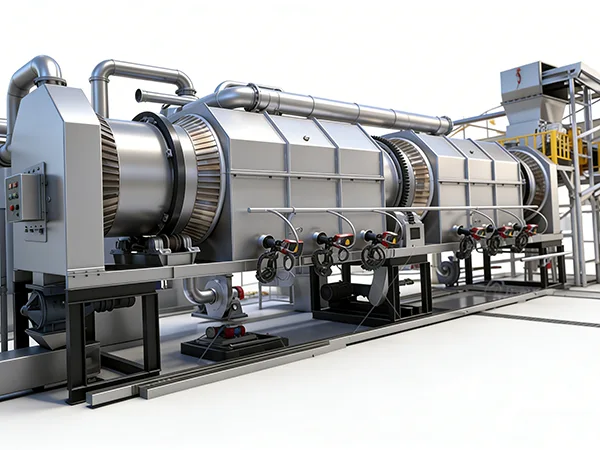
3. Carbonization Furnace
This is the heart of any charcoal production line. The carbonization furnace converts biomass into charcoal through pyrolysis—heating the material in a low-oxygen environment to drive off volatile compounds and leave behind carbon-rich charcoal.
For small-scale operations, the hanging carbonization furnace (also called a hoisting carbonization furnace) is the most popular choice. It processes materials in batches—typically up to 2 tons at a time—with each batch taking approximately 4 to 8 hours. The price range for a small carbonization furnace is typically between $5,000 and $10,000.
Some producers opt for continuous carbonization furnaces, which offer higher throughput but come with a higher price tag. These systems are better suited for operations that have secured stable, high-volume demand.
4. Charcoal Grinder / Milling Machine
Once the carbonization process is complete, you have charcoal in bulk form. Depending on your end product, you may need to grind this charcoal into powder. A charcoal grinder (often an edge runner mill) pulverizes the charcoal into fine particles.
Grinding serves two purposes: it prepares the charcoal for briquetting (if you’re making briquettes) and it improves the quality of the final product by ensuring uniform particle size. For small-scale lines, a compact edge runner mill is the most suitable option due to its small footprint and reasonable cost.
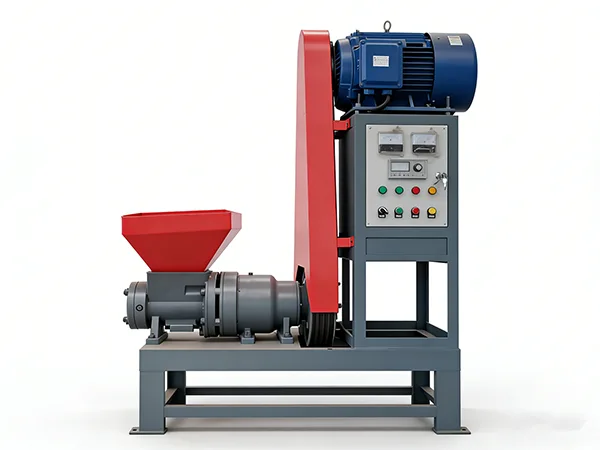
5. Briquette Press Machine / Forming Machine
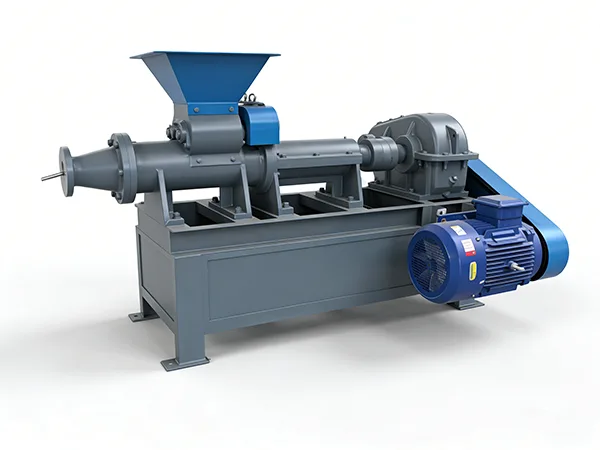
If you’re planning to produce charcoal briquettes—and you should be, because they command higher prices than bulk charcoal—you’ll need a briquette press machine (also called a forming machine or extruder).
A charcoal extruder machine uses a screw or hydraulic system to compress charcoal powder into dense briquettes. The machine relies on interchangeable molds, allowing you to produce briquettes in various shapes and sizes. This versatility is a significant advantage for small businesses looking to differentiate their products in the market.
Small screw extrusion briquette presses are particularly suitable for individual entrepreneurs and family workshops, offering low investment (typically $3,000 to $12,000) and a small footprint.
6. Packaging Machine (Optional)
The final step in the production line is packaging. A charcoal packaging machine helps you present your products professionally, protect them during transport, and build your brand. While optional for very small operations, packaging equipment becomes increasingly important as you scale and target retail markets.
The Complete Production Workflow
Now that you understand each component, let’s walk through the entire production process:
-
Crushing: Raw biomass (wood waste, coconut shells, agricultural residues) is fed into the wood crusher, which reduces it to small, uniform pieces.
-
Drying: The crushed material passes through a dryer to reduce moisture content to below 12-15%.
-
Carbonization: The dried material enters the carbonization furnace, where it undergoes pyrolysis at high temperatures in a low-oxygen environment.
-
Grinding (optional): The resulting charcoal is ground into fine powder using a charcoal grinder.
-
Briquetting (optional): The charcoal powder is mixed with a binder and compressed into briquettes using a briquette press machine.
-
Packaging: The finished products are packaged for sale and distribution.
Small Scale vs. Large Scale: Making the Right Choice
One of the most common questions new producers ask is whether to start with batch-type or continuous equipment. The answer depends on your goals, budget, and market demand.
| Feature | Batch-Type (Small Scale) | Continuous-Type (Large Scale) |
|---|---|---|
| Investment | $10,000 – $50,000 | $200,000+ |
| Operation | Load, process, empty in cycles | Continuous feed and discharge |
| Space Required | Compact | Extensive |
| Ideal For | Startups, rural entrepreneurs, limited budgets | Established businesses, high-volume production |
| Flexibility | High—easy to adjust production levels | Lower—designed for consistent output |
Batch-type charcoal production lines are typically smaller and more cost-effective, making them suitable for small-scale operations or decentralized charcoal production. Continuous-type machines, favored by large-scale industries, facilitate ongoing production and are suitable for businesses aiming for high productivity.
Investment and ROI: What to Expect
Let’s talk numbers. A small scale charcoal production line typically requires an investment of $20,000 to $50,000 for a complete setup. Here’s a rough breakdown:
-
Wood crusher: $2,000 – $5,000
-
Dryer: $1,000 – $3,000
-
Carbonization furnace: $5,000 – $10,000
-
Charcoal grinder: $1,000 – $3,000
-
Briquette press: $3,000 – $12,000
-
Packaging equipment: $1,000 – $3,000
Total: Approximately $13,000 – $36,000 for a basic line.
The return on investment depends on several factors, including raw material costs, labor, energy expenses, and selling prices. However, many small-scale producers report recouping their investment within 12 to 18 months of operation.
For context, a small charcoal production line processing 1-2 tons of raw material per day can produce approximately 400-800 kg of finished charcoal daily. At wholesale prices of $200-$400 per ton, that translates to $80-$320 in daily revenue—or $2,400-$9,600 per month.
Choosing the Right Equipment Supplier
With so many manufacturers entering the charcoal production line market, selecting a reliable supplier is critical. The quality of your equipment directly affects your production efficiency, product quality, and maintenance costs.
Henan Manto Machinery Equipment Co., Ltd. has been serving the biomass processing industry for over 25 years, with a production base in the Zhengzhou West Development Zone. The company manufactures a comprehensive range of wood processing and biomass equipment, and has delivered solutions to clients in more than 100 countries worldwide.
When evaluating suppliers, consider these factors:
-
Factory-direct pricing: Suppliers with their own manufacturing facilities typically offer better prices and quality control.
-
Experience: Look for companies with a proven track record in the industry.
-
After-sales support: Installation guidance, spare parts availability, and technical support are essential for smooth operations.
-
Customization capabilities: The ability to tailor equipment to your specific raw materials and production goals is a significant advantage.
The Business Case for Small Scale Charcoal Production
Why are so many entrepreneurs turning to small scale charcoal production? The answer lies in the convergence of several powerful trends:
1. Rising Demand for Sustainable Fuel
As consumers and businesses seek alternatives to fossil fuels and traditional wood charcoal (which contributes to deforestation), demand for sustainably produced biomass charcoal continues to grow. Charcoal briquettes made from agricultural waste and wood residues offer a clean-burning, renewable alternative.
2. Waste-to-Value Opportunity
Every year, millions of tons of biomass waste go to landfills or are burned in the open—contributing to pollution and wasting valuable energy potential. Biomass waste recycling through charcoal production transforms this problem into profit.
3. Low Barrier to Entry
Compared to many manufacturing businesses, charcoal production requires relatively modest capital investment and can be operated with basic technical skills. This makes it accessible to rural entrepreneurs, farmer cooperatives, and small business owners.
4. Multiple Revenue Streams
Beyond charcoal itself, the carbonization process produces byproducts like wood vinegar and tar, which can be collected and sold. These additional revenue streams improve overall profitability.
Common Mistakes to Avoid
Based on years of industry experience, here are the most common pitfalls new producers encounter:
1. Skipping the Dryer
Many beginners try to save money by skipping the dryer and relying on sun-drying. This often leads to inconsistent moisture levels, inefficient carbonization, and poor product quality. A proper dryer is a worthwhile investment.
2. Underestimating Raw Material Costs
While biomass waste is often cheap or free, collection and transportation costs can add up. Factor these into your business plan.
3. Choosing Price Over Quality
The cheapest equipment often comes with the highest maintenance costs and shortest lifespan. Henan Manto Machinery emphasizes that investing in quality equipment from a reputable manufacturer pays off in the long run through reduced downtime and better product quality.
4. Neglecting Market Research
Don’t assume that charcoal will sell itself. Understand your target market, their quality expectations, and their price sensitivity before you start production.
Conclusion: Is Small Scale Charcoal Production Right for You?
So, is a small scale charcoal production line the best entry point for your biomass business? The answer depends on your goals, resources, and market conditions. But for many entrepreneurs, the answer is a resounding yes.
The combination of rising demand for sustainable fuel, abundant biomass waste, and accessible equipment costs makes this an opportune time to enter the charcoal business startup space. With the right charcoal making machine lineup—from wood crusher to carbonization furnace to briquette press machine—you can build a profitable, sustainable business that turns waste into value.
Whether you’re a rural entrepreneur looking to create local jobs, a farmer seeking to monetize agricultural waste, or an investor exploring renewable energy opportunities, the small scale charcoal production line offers a proven path to profitability.
Ready to explore your options for a small scale charcoal production line? Contact the experts at Henan Manto Machinery Equipment Co., Ltd. to discuss your specific biomass processing needs and get a customized equipment solution.