Skip to content
Let me tell you about a conversation I had last week with a guy in Indonesia who wanted to start a charcoal business. He’d seen a few videos online, got excited, and asked me: “How much does a charcoal plant cost?”
I told him what I’m about to tell you: it depends.
A charcoal plant equipment price isn’t a single number. It’s a range — a wide one. You can spend anywhere from a few thousand dollars for a basic setup to over $200,000 for a fully automated industrial line. The difference isn’t just about capacity; it’s about automation, build quality, feedstock compatibility, and whether you’re making raw briquettes or premium carbonized charcoal.
I’ve helped dozens of buyers navigate this market, and I’ve seen the same mistakes repeated. Buyers focus on the sticker price and ignore the total cost of ownership. They choose the wrong type of equipment for their material. They forget to factor in shipping, installation, and spare parts. This guide is designed to change that. I’ll walk you through what a charcoal making machine actually costs in 2026, break down the factors that drive those prices, and give you a framework to make a smart, informed purchase.
2026 Charcoal Plant Equipment Price Tiers
Let’s start with the numbers you came here for. In 2026, charcoal plant equipment prices fall into three core categories based on capacity and automation level.
Entry‑Level & Small‑Scale Equipment: $3,000 – $30,000
This category covers basic batch kilns, small briquette presses, and manual or semi‑automated systems. These are designed for startups, test runs, or small workshops processing 200–500 kg per day.
-
Small batch carbonization furnace: $3,200 – $15,000 [5†L37-L38]
-
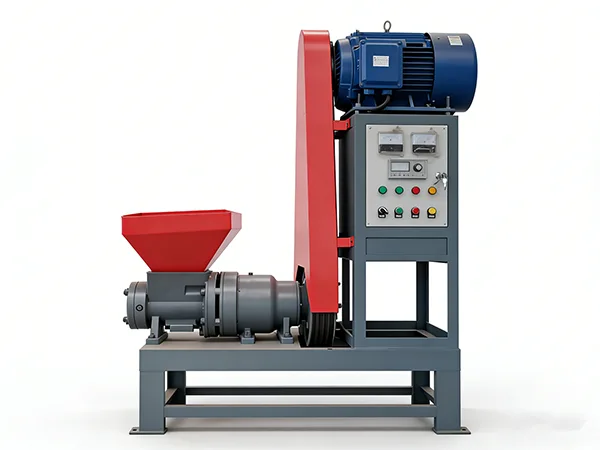
Small briquette press: $2,750 – $5,000 [4†L42-L44]
-
Basic biochar kiln: $4,500 – $12,000 [6†L13-L14]
A vertical coconut shell charcoal machine, for example, can cost around $2,800–$2,900 [6†L18-L20]. These entry‑level units are affordable and simple to operate. But they’re labor‑intensive, have lower efficiency, and produce inconsistent quality. If you’re serious about growing, you’ll likely outgrow them quickly.
Mid‑Range Semi‑Automatic Lines: $15,000 – $80,000
This is the most popular segment for serious small to medium businesses. These lines include continuous carbonization furnaces, semi‑automated briquette extruders, and basic drying systems.
-
Continuous carbonization furnace (200–1,500 kg/h): $15,000 – $38,000 [3†L22-L23]
-
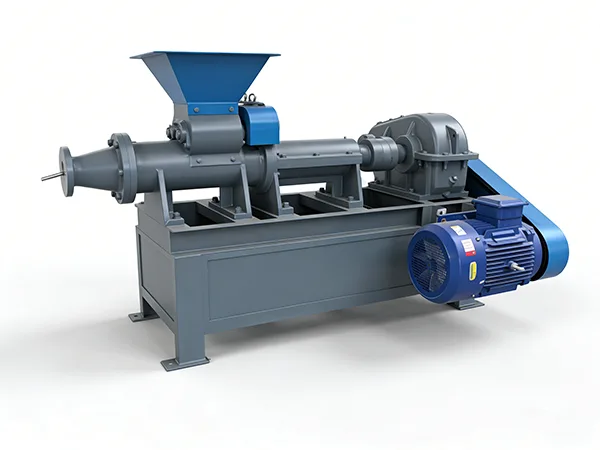
Medium‑sized charcoal extruder: $20,000 – $35,000
-
Sawdust briquette machine: $4,500 – $8,300 [4†L8]
A medium‑scale operation processing 1–3 tons of raw material daily typically requires an investment of $30,000–$80,000 [1†L17-L18]. These systems offer consistent output, moderate automation, and good ROI for growing businesses.
High‑Capacity Industrial Lines: $80,000 – $200,000+
For commercial producers targeting export markets or large‑scale biomass processing, you’re looking at fully automated continuous production lines.
-
Large‑scale continuous carbonization furnace: $100,000 – $239,800 [2†L20-L21][3†L7]
-
1 ton/hour charcoal briquette production line: $80,000 – $400,000+ [1†L28-L29]
-
Complete industrial charcoal plant: $150,000 – $400,000+
The charcoal production line cost for a 1 ton per hour setup can range from $80,000 to over $400,000 depending on automation level and how complete the line is [1†L28-L29]. For large‑scale production processing over 20 tons per day, a large briquette machine with hourly output over 2 tons is priced at 150,000–300,000 RMB (approximately $20,000–$40,000 USD) [1†L7-L8].
Factors That Drive Charcoal Plant Equipment Prices
Beyond the basic capacity, several variables significantly impact the final charcoal plant equipment price.
1. Automation Level
This is the single biggest cost driver. Manual batch kilns are cheap but labor‑intensive. Semi‑automated lines with PLC controls, auto‑feeding, and auto‑discharge systems can add 30–50% to the base price. But they also reduce labor costs by 60–80%, which pays back quickly.
A continuous carbonization furnace with PLC control and automation technology is easier to operate and has lower labor costs [2†L52-L53]. You pay more upfront, but you save on every ton produced.
2. Feedstock Compatibility
Different biomass types require different equipment configurations. Coconut shells are dense and need higher temperatures; sawdust requires careful moisture control; palm kernel shells are abrasive and wear parts faster.
A machine that can handle multiple feedstocks — wood, coconut shells, rice husks, palm kernel shells — typically costs 15–25% more than a single‑feedstock unit. But the flexibility protects you from supply disruptions. Henan Manto Machinery Equipment Co., Ltd. offers multi‑feedstock continuous carbonization furnaces that can process sawdust, wood chips, coconut shells, palm shells, and various agricultural residues [3†L15-L18].
3. Build Quality and Materials
The reactor is the heart of any charcoal plant. Cheap machines use ordinary steel that warps and cracks under high heat. Premium equipment uses heat‑resistant alloy steel (like 310S stainless) that can last 5,000+ hours. The price difference is substantial — often 30–50% — but the longevity and reliability are worth every cent.
4. Syngas Recycling and Emissions Control
A modern continuous carbonization furnace captures the combustible gases released during carbonization and recirculates them as fuel. This closed‑loop design reduces external fuel consumption by 30–50%. But it adds complexity and cost — typically $5,000–$20,000 extra depending on the system.
5. Drying and Cooling Systems
Wet biomass (above 15% moisture) destroys carbonization efficiency. A rotary dryer can add $10,000–$50,000 to your line. A cooling system for the finished charcoal adds another $3,000–$15,000. These aren’t optional if you want consistent, high‑quality charcoal.
Hidden Costs Most Buyers Forget
The charcoal plant equipment price is just the beginning. Here are the costs that catch most buyers off guard.
Shipping and Logistics
A complete production line can weigh 10–50 tons. Shipping from China to Africa or South America typically costs $3,000–$15,000 depending on destination and container size. Add customs duties (5–20% of the equipment value) and inland transport to your site.
Installation and Commissioning
Unless you have a skilled engineering team, you’ll need a technician from the supplier to supervise installation and train your operators. This can cost $2,000–$10,000 plus travel expenses. Some suppliers, like Henan Manto Machinery, include basic commissioning in the package, but always confirm.
Spare Parts
A broken auger or thermocouple can shut you down for weeks if you don’t have spares. A comprehensive spare parts kit — dies, screws, bearings, thermocouples, belts — typically costs 10–15% of the machine price. Order it with your initial purchase to save on separate shipping.
Power and Facility Upgrades
A medium‑sized continuous carbonization line needs 50–150 kW of power. If your site doesn’t have three‑phase power, you’ll need a transformer or generator — another $5,000–$20,000.
ROI: How Fast Does a Charcoal Plant Pay for Itself?
Let’s talk about the numbers that actually matter. A wood charcoal plant setup cost of $50,000 for a medium line can pay for itself in 6–12 months with consistent operation.
Here’s a realistic example:
| Item | Amount |
|---|---|
| Equipment investment | $75,000 |
| Monthly output (1 ton/hour, 8 hrs/day, 25 days) | 200 tons |
| Selling price (standard charcoal briquettes) | $300/ton |
| Monthly revenue | $60,000 |
| Production costs (raw materials, labor, electricity, maintenance) | ~$65/ton = $13,000 |
| Monthly gross profit | $47,000 |
| Payback period | ~2–3 months |
Even with more conservative numbers — lower selling prices or higher costs — most producers recover their investment in 6–18 months. For a detailed feasibility analysis, check out this charcoal production plant cost breakdown from industry experts.
The return on investment for a wood charcoal manufacturing plant depends on plant capacity, product line (lump vs. briquettes), and access to steady markets [7†L9-L10]. Larger plants with higher automation achieve faster payback through lower per‑ton operating costs.
Common Mistakes to Avoid
-
Buying on price alone — The cheapest option is rarely the best value. You’ll spend more on downtime and repairs than you saved.
-
Skipping the feedstock test — Always have the supplier run your actual material through their system. Different biomass types behave differently.
-
No spare parts strategy — A broken die or screw can shut you down for weeks. Order a spare parts kit with your initial purchase.
-
Ignoring moisture content — Wet biomass wastes energy and produces poor‑quality charcoal. A dryer is essential if your feedstock exceeds 15% moisture.
-
Underestimating power requirements — A medium line needs 50–150 kW. Check your facility’s capacity before ordering.
Conclusion
A charcoal plant equipment price in 2026 can range from a few thousand dollars for a basic batch kiln to over $200,000 for a fully automated industrial line. The right choice depends on your feedstock, your production goals, and your budget.
Henan Manto Machinery Equipment Co., Ltd. offers equipment across all price tiers — from compact continuous carbonization furnaces starting around $15,000–$20,000 to high‑capacity industrial lines with PLC automation. Their machines are engineered for heavy continuous use, backed by comprehensive spare parts support, and priced to deliver a solid return on investment.
Take the time to assess your feedstock — volume, type, and moisture content. Match that to a line with the right capacity and build quality. Factor in the hidden costs — shipping, installation, spare parts, power upgrades. And don’t skip the feedstock test.
With payback periods measured in months, not years, a charcoal production line is one of the smartest investments you can make in today’s renewable energy economy. The profit is waiting — you just need to build the right plant to capture it.