Skip to content
If you’re browsing Google searching for ways to turn cheap wood waste, sawmill leftovers and agricultural residues into profitable BBQ, shisha or industrial charcoal, you’ve likely typed phrases like “automatic sawdust charcoal making machine”, “small charcoal plant setup” or “biomass briquette production equipment”. Most first-time investors struggle to tell apart semi-automatic units from fully automated lines, miscalculate raw material requirements, or pick suppliers that cannot offer full turnkey support. This practical buyer’s guide breaks down everything you need to know about modern automatic sawdust charcoal making machine systems, from workflow, core equipment matching, cost control, to reliable factory manufacturing partners.
Many beginners mistakenly believe charcoal production relies on heavy manual labor: hauling raw sawdust, manually feeding extruders, monitoring carbonization furnaces around the clock and cooling finished charcoal by hand. This outdated mode wastes labor, causes unstable charcoal quality and limits daily output. Today’s upgraded automatic sawdust charcoal making machine series solves all these pain points with integrated auto feeding, drying, briquetting, carbonization and discharging functions, suitable for family small workshops, medium commercial fuel factories and large-scale industrial biomass recycling plants.
What Makes An Automatic Sawdust Charcoal Making Machine Fully Automated?
A standard automatic sawdust charcoal making machine production chain includes four interconnected automated modules, each controlled by a unified PLC operating panel to cut manual intervention by over 70%.
First is the automatic raw material pretreatment module. Raw sawdust usually carries 30%–50% moisture and mixed wood branches, bark or metal debris. The automated system uses magnetic separators to filter iron nails and metal fragments, followed by automatic screw conveyors that send materials into rotary dryers without human handling. The dryer features real-time humidity sensors that adjust hot air temperature automatically, keeping sawdust moisture locked at the ideal 6%–8% range for stable briquette molding. Unlike semi-automatic setups that require workers to shovel sawdust repeatedly, this auto pretreatment system runs 24 hours nonstop with only one supervisor on duty.
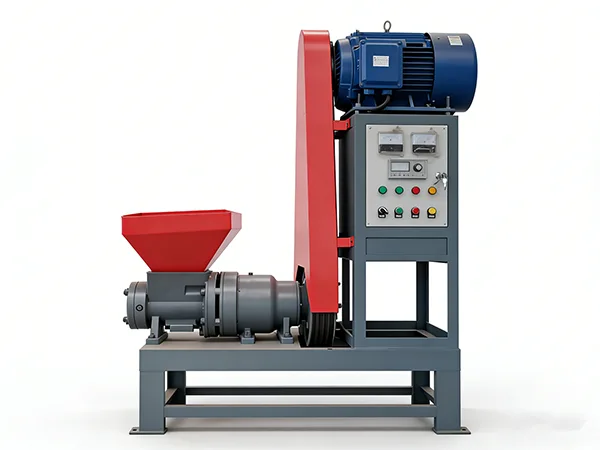
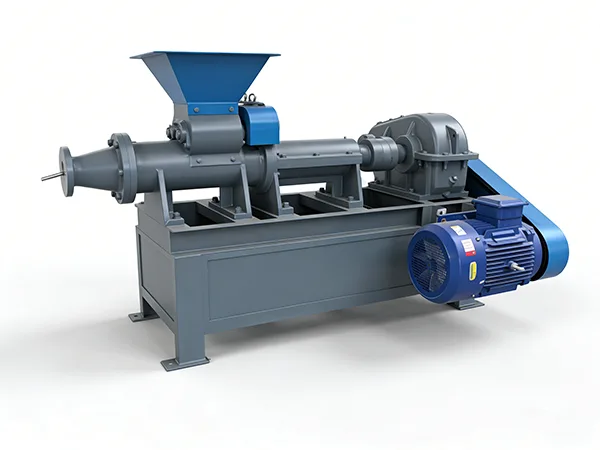
Second, the core automatic sawdust briquette extruder unit. This is the heart of every automatic sawdust charcoal making machine. High-pressure screw extrusion compresses dry sawdust into solid cylindrical wood briquettes without chemical binders, leveraging natural lignin inside wood fibers for tight bonding. Automatic speed adjustment matches dryer discharge volume to avoid material backlog or machine idling. Wear-resistant alloy sleeves extend service life, lowering long-term spare part replacement costs for factory operators.
Third, the automated carbonization furnace system. Preformed wood briquettes are transported via sealed conveyor belts into continuous carbonization furnaces. The furnace recycles flammable wood gas generated during pyrolysis to heat the chamber, slashing external fuel costs. Temperature sensors and automatic air intake valves maintain oxygen-limited carbonization conditions, producing high-carbon molded charcoal with low ash and long burning time. Batch-type automatic furnaces fit small-scale lines, while horizontal continuous furnaces serve industrial plants with daily output over 5 tons.
Fourth, post-processing automatic cooling and packaging equipment. Hot carbonized charcoal moves through air-cooling pipelines automatically, then enters weighing and bagging machines for finished charcoal packaging. This full closed-loop automation eliminates direct human contact with high-temperature charcoal, greatly improving workplace safety for all production staff.
Matching Automatic Sawdust Charcoal Making Machine Lines For Different Business Scales
New investors always ask: which automatic sawdust charcoal making machine configuration fits my budget and raw material supply? Based on thousands of global project cases delivered by Henan Manto Machinery Equipment Co., Ltd., we divide production setups into three clear tiers for easy selection.
Small-Scale Automated Line (100–800kg finished charcoal daily)
Perfect for rural sawmills, family startups and local BBQ charcoal retailers with limited sawdust supply. The simplified automatic sawdust charcoal making machine combination includes mini auto dryer, single briquette extruder and vertical batch carbonization furnace. It occupies less than 60 square meters of workshop space, requires only one operator, and has low initial investment. Many clients from Southeast Asian villages and African small towns choose this model to process local sawmill waste into marketable molded charcoal.
Medium-Scale Fully Automatic Line (1–4 tons finished charcoal daily)
Ideal for commercial biomass fuel manufacturers supplying restaurants, barbecue markets and shisha retailers. This complete set equips double auto feeding conveyors, twin screw briquette machines and semi-continuous carbonization furnaces. Henan Manto Machinery customizes conveyor lengths and furnace capacity according to clients’ local raw material volume, ensuring every link of the automatic sawdust charcoal making machine operates without flow bottlenecks. Factories using this medium line see steady monthly profit margins and can fulfill bulk charcoal export orders to neighboring countries.
Large Industrial Automatic Charcoal Production Plant (5–15 tons finished charcoal daily)
Designed for large biomass recycling enterprises and cross-border charcoal exporters. The full turnkey line integrates heavy-duty automatic sawdust crushing machines, multi-unit drying systems, high-output briquette extruders, horizontal continuous carbonization furnaces and automatic packaging assembly lines. All equipment shares a central PLC control cabinet for unified monitoring. Large plant clients value one-stop manufacturing, installation and training services that only professional manufacturers can provide.
Key Advantages Of Choosing Automated Sawdust Charcoal Equipment Over Manual Production
- Stable finished charcoal quality: Constant temperature, humidity and extrusion pressure control from the automatic sawdust charcoal making machine eliminates inconsistent briquette density, cracking and low carbon content issues common in manual workshops. Molded charcoal produced by automated lines meets international export standards for BBQ and hookah fuel.
- Sharp labor cost reduction: A full automatic charcoal line only needs 1–2 supervisors, while equivalent manual production requires 6–10 workers. For factories running year-round, labor savings create massive long-term profit growth.
- Lower energy consumption: Recycled wood gas carbonization and intelligent power adjustment cut electricity and fuel bills by 30% compared to outdated semi-auto machines.
- Eco-friendly operation: Sealed automated pipelines trap wood smoke and combustible gas, complying with global environmental emission rules. Many regional governments offer policy subsidies for biomass recycling factories equipped with fully automatic charcoal making systems.
- Flexible raw material compatibility: Beyond regular sawdust, the automatic sawdust charcoal making machine can process wood chips, rice husks, coconut shells, bamboo scraps and crop stalks after simple pretreatment, expanding your usable waste material sources.
How To Pick A Trusted Manufacturer For Automatic Sawdust Charcoal Making Machine
Countless machinery traders sell low-quality charcoal equipment online, but only professional integrated manufacturers guarantee durable automated lines and full after-sales support. When comparing suppliers, focus on three core criteria.
First, verify independent R&D and production capacity. Avoid middlemen who outsource all machine parts. Henan Manto Machinery owns a 25,000-square-meter production workshop dedicated to charcoal processing machinery, with in-house workshops for lathe processing, welding, assembly and testing. Every automatic sawdust charcoal making machine undergoes 72-hour continuous running testing before delivery to eliminate hidden mechanical faults.
Second, confirm full turnkey service coverage. Reliable manufacturers provide free factory layout design, on-site installation guidance, operator technical training and 12-month full machine warranty. Many overseas clients lack local mechanical repair teams; global spare parts delivery and remote video troubleshooting become critical for uninterrupted production. Henan Manto Machinery sends professional engineering teams to install and debug automatic sawdust charcoal making machine lines in over 30 countries annually, from Indonesia, Vietnam, Nigeria to Peru and Malaysia.
Third, check real on-site factory cases. Request video footage of running automatic charcoal lines, finished charcoal samples and client feedback. Reputable manufacturers will openly share completed project records, while small traders cannot provide verifiable live production cases.
Common Troubleshooting Tips For Automatic Sawdust Charcoal Making Machine Operators
Even fully automated equipment needs routine maintenance to maintain long service life. Here are frequent minor issues and simple fixes collected from Henan Manto Machinery’s after-sales engineers:
- Briquette cracking after extrusion: Usually caused by incorrect sawdust moisture. Adjust dryer temperature via the automatic humidity controller to stabilize water content at 6%–8%.
- Carbonized charcoal low in fixed carbon: Check the furnace’s automatic air intake valve; excessive oxygen inside the chamber burns away carbon. Reduce air flow and extend carbonization holding time by 1–2 hours.
- Conveyor jamming during auto feeding: Clean magnetic metal separators daily to remove accumulated nails and metal debris that block screw rotation.
- High power consumption: Lubricate all rotating bearings of the automatic sawdust charcoal making machine every two weeks with high-temperature grease to reduce friction resistance.
Final Thoughts On Investing In Automatic Sawdust Charcoal Making Machine
The global demand for clean biomass charcoal keeps rising as consumers switch from polluting coal and raw log charcoal to eco-friendly molded sawdust briquette charcoal. For entrepreneurs entering this industry, investing in a reliable automatic sawdust charcoal making machine eliminates most production pain points of traditional manual workshops and unlocks scalable profit potential.
As a top turnkey charcoal equipment manufacturer with 25 years of industry experience, Henan Manto Machinery Equipment Co., Ltd. designs, produces and delivers customized automated charcoal production lines tailored to each client’s raw material type, target daily output and factory space. Our product portfolio covers mini automatic sawdust charcoal making machine units for startups and full industrial continuous carbonization lines for large exporters, with complete technical drawings, parameter sheets and factory test videos available for free consultation.
If you are ready to calculate investment costs, check equipment quotations or view live production footage of automatic sawdust charcoal making machine systems, visit our official website to connect with our professional engineering team anytime. We offer one-on-one project planning to help you build a stable, profitable automatic charcoal manufacturing plant from scratch.